
AI Use Cases by NZ Sector: Retail, Hospitality, Trades, Professional Services and Agriculture
If you have been wondering where AI fits in a business like yours, this guide is your choose-your-path starting point. Instead of abstract ideas, here are practical AI use cases NZ SMEs can test in five common sectors: retail, hospitality, trades, professional services and agriculture. The focus is on low-cost, no-code options first, plus the risk checks that matter in New Zealand, including responsible AI NZ guidance, Privacy Act 2020 considerations and data residency New Zealand questions when tools process information offshore.
Retail

For AI for retail NZ, the quickest wins are usually content and customer service. Useful examples include product description drafts for new stock, returns and delivery FAQ answers, review summarisation to spot common issues, simple demand notes from past sales trends, and promotional email draft variations for different customer groups. Start small:
1) Pick one product category or one FAQ topic.
2) Gather 10 to 20 existing examples.
3) Use a no-code (Chat GBT, Gemini) AI writing or spreadsheet tool to draft new versions.
4) Review every output for accuracy, tone and pricing details before publishing.
5) Track time saved and customer response. Cost note: often free trials or low-cost monthly plans are enough to test this. Risk to watch: product claims, pricing errors and misleading summaries. If you use customer reviews, order history or email lists, think about Privacy Act 2020 obligations, whether data is processed overseas, and vendor settings for training, retention and access controls.
Hospitality
AI for hospitality NZ works well where staff are busy and repeat questions pile up. Good use cases include booking enquiry replies, menu description drafts, staff onboarding checklists, feedback theme summaries from reviews or comment cards, and social post caption ideas for specials or events. Start small:
1) Choose one repetitive task such as booking replies.
2) Create approved wording for common scenarios like dietary questions or group bookings. 3) Use AI to draft responses from that source material.
4) Keep a human check before sending.
5) Add a simple list of what the tool should never guess, such as allergens, opening hours or confirmed availability. Cost note: many booking, email and document tools now include AI features at low cost. Risk to watch: incorrect information about allergens, bookings or opening hours can damage trust quickly. If guest details are included, apply the Privacy Act 2020, check overseas processing, and review whether the vendor stores prompts or uses data to improve its models.
Trades
For AI for trades NZ, the biggest gains are admin reduction and faster follow-up. Practical uses include quote scope drafting from site notes, turning job notes into invoice descriptions, follow-up text or email drafts after visits, safety checklist drafts for recurring job types, and plain-English summaries of supplier documentation. Start small:
1) Pick one admin task that slows the team down.
2) Build a simple template with the fields you always need, such as site, materials, exclusions and next steps.
3) Feed in one week of past examples.
4) Have staff test outputs on low-risk jobs only. 5) Refine the template based on what gets missed. Cost note: start with existing tools such as email, notes apps or job management software before buying anything new. Risk to watch: missing scope items, incorrect safety content and overconfident wording in customer messages. If job notes include names, addresses or photos, the Privacy Act 2020 matters. Check vendor permissions, storage location, account security and who can see uploaded files.
Professional services
AI for professional services NZ is most useful for drafting and internal summarising, not replacing judgement. Strong examples include meeting note summaries, proposal outlines, client update drafts, internal knowledge summaries across policies or past work, and first-pass research organisation. Start small:
1) Start with internal material that is low sensitivity.
2) Set clear rules on what can and cannot be pasted into tools.
3) Use AI for structure and summaries, not final advice.
4) Review outputs for accuracy, citations, tone and confidentiality.
5) Document the workflow so the team uses it consistently. Cost note: a team can often begin with one paid seat and a tightly defined use case. Risk to watch: confidentiality, privilege, factual errors and accidental disclosure. This sector should be especially careful with client information. Under the Privacy Act 2020, consider whether personal information is involved, whether the provider processes data overseas, and whether settings disable model training, limit retention and support auditability.
Agriculture
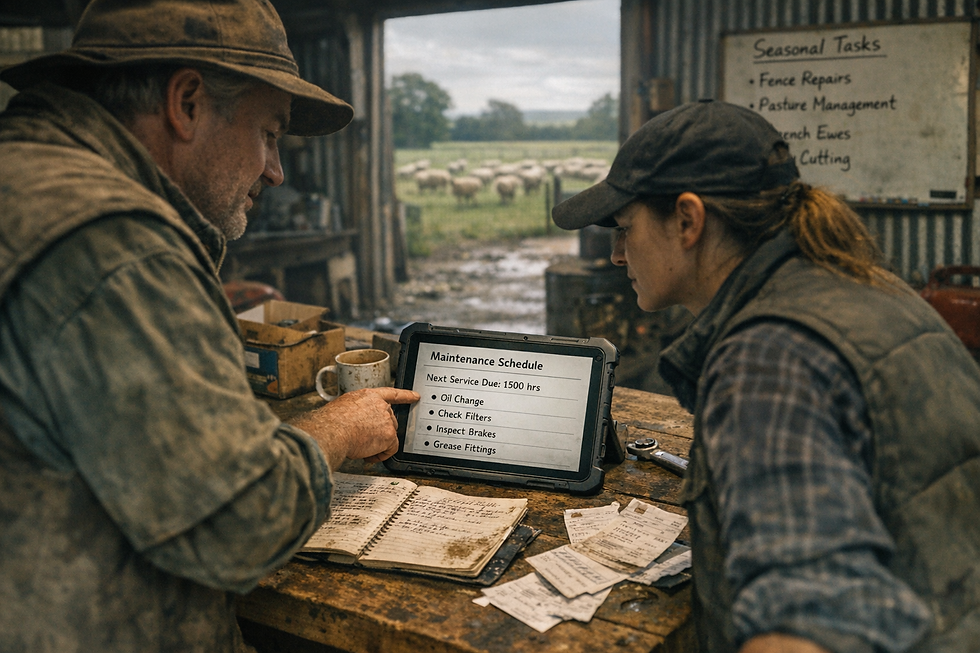
AI for agriculture NZ is often less about flashy automation and more about clearer records and communication. Practical uses include turning maintenance logs into schedules, compliance checklist drafting, supplier comparison summaries, customer communications for farm gate sales or agri-services, and seasonal task planning notes based on past records. Start small:
1) Choose one paper-heavy process such as maintenance or compliance prep.
2) Gather your current forms, logs or supplier quotes.
3) Ask AI to create a standard summary or checklist format.
4) Compare outputs against real requirements and local practice.
5) Keep the final record in your existing farm management or document system. Cost note: low-cost document and spreadsheet tools are usually enough for early tests. Risk to watch: compliance inaccuracies, outdated assumptions and poor record quality if staff rely on unchecked outputs. If customer, staff or supplier personal information is included, apply the Privacy Act 2020. Also think about rural connectivity, backup practices, overseas cloud processing and vendor security controls.
The best NZ SME AI examples are rarely the most complex. They are the small, repeatable jobs that save time each week without creating unnecessary risk. Choose one sector-specific use case, test it with low-cost tools, keep a human review step, and check privacy, security and data residency New Zealand questions before scaling. For practical next steps, download the Sector AI Quick Wins Checklist or contact us to create a sector-specific roadmap. Useful NZ resources: MBIE Responsible AI guidance for businesses; Office of the Privacy Commissioner privacy principles and overseas disclosure guidance; NZ Digital Government guidance on cloud and jurisdiction risk; and NCSC cyber security resources for organisations.


