
Responsible AI for NZ SMEs: A Plain-English Checklist for Privacy Act 2020 + Customer Trust
In the rapidly evolving world of technology, artificial intelligence (AI) offers exciting opportunities for small to medium enterprises (SMEs) in New Zealand. However, with these opportunities come significant responsibilities, especially when it comes to customer privacy and trust. This guide aims to provide a practical, easy-to-understand checklist for NZ SMEs looking to use AI responsibly, without getting bogged down in legal jargon.
Understanding 'Responsible AI' for NZ SMEs
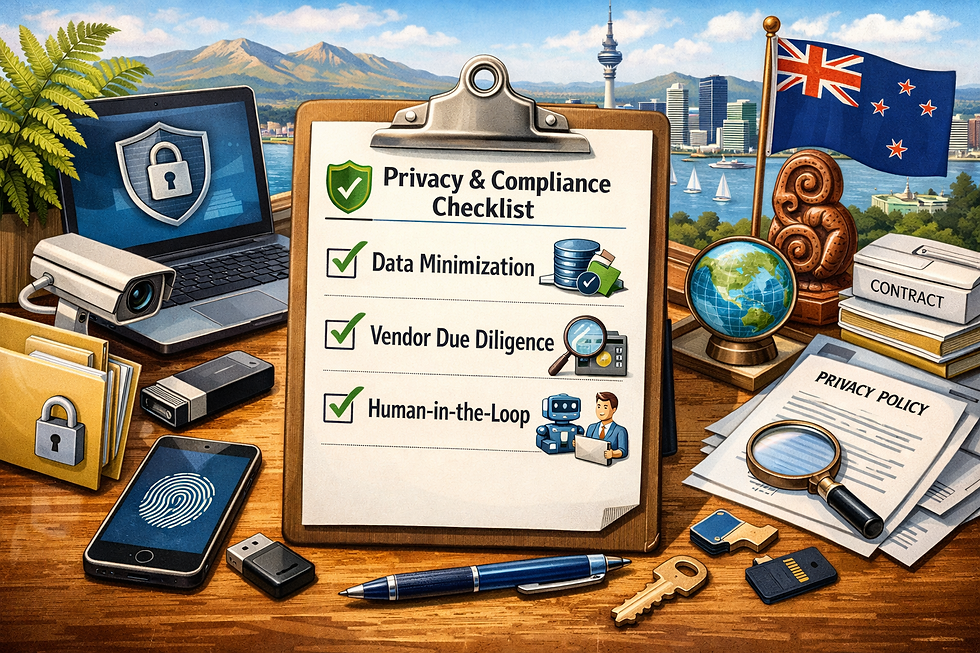
For a small New Zealand business, 'responsible AI' means ensuring transparency, accountability, and safety in AI usage. These are key outcomes highlighted by the Ministry of Business, Innovation and Employment (MBIE) in their Responsible AI guidance. Transparency involves making sure that customers understand how their data is being used. Accountability means taking responsibility for the outcomes of AI decisions, and safety is about ensuring that AI systems do not cause harm. For instance, a local café using AI to manage bookings needs to ensure that the AI system informs customers about data usage and that the data is securely stored.
Privacy Act 2020 in Practice for NZ SMEs
The Privacy Act 2020 governs how personal information is handled. For SMEs, this could include customer contact details, booking notes, staff rosters, and CCTV footage. Understanding what constitutes 'personal information' is crucial. For example, a dental clinic in Auckland should be aware that notes on patient preferences are personal data and must be handled with care, ensuring compliance with the Act.
Checklist Before Pasting Data into AI Tools
Before inputting data into any AI tool, SMEs should consider data minimization and removing identifiers to protect customer privacy. Using test data instead of real data whenever possible is advisable. If the AI tool allows, turning off training features can prevent your data from being used to improve the AI, thus protecting privacy. Internal approval is also crucial to ensure compliance. A Wellington-based hotel could, for example, test their AI-driven booking system with fictional data to ensure it functions correctly without risking customer privacy.
Working with AI Vendors: Due Diligence
Choosing the right AI vendor is critical. Remember, using third-party providers does not absolve you of responsibility. A simple due-diligence checklist includes questions about data security, data retention policies, support services, and breach processes. For instance, a Christchurch retail store should verify if their AI vendor supports secure data storage and has a clear, documented process for handling data breaches.
Implementing a Human-in-the-loop System
A 'human-in-the-loop' system requires that a human reviews AI outputs before they reach customers, reducing the risk of AI errors. It's important to monitor for potential 'AI hallucinations' where AI might generate inaccurate or misleading content. A travel agency in Queenstown could appoint staff to review AI-generated itineraries to ensure accuracy and relevance before sending them to clients.

Adopting AI technologies can significantly benefit NZ SMEs, but it's essential to do so responsibly. By following this checklist, businesses can manage risks and protect customer privacy effectively. For further assistance, download our 'Responsible AI Checklist (NZ SME edition)' or book a privacy-safe AI setup consultation. Remember, this guide provides general information and should not be considered legal advice.


